

Climate Action Strategy
Northumberland County is committed to taking coordinated action on climate change to protect our communities, environment, and future.
As the past decade has been the warmest on record and impact are already being felt locally, the County is advancing a comprehensive Climate Action Strategy to reduce emissions and build resilience.
Understanding climate change
Climate change refers to the long-term changes in temperature, precipitation, and weather patterns caused by the buildup on greenhouse gases in the atmosphere.
Human activities – especially the burning of coal, oil, and natural gas since the Industrial Revolution – have increased greenhouse gas emissions and accelerated this warming, leading to widespread impacts on people, infrastructure, and the natural environment.
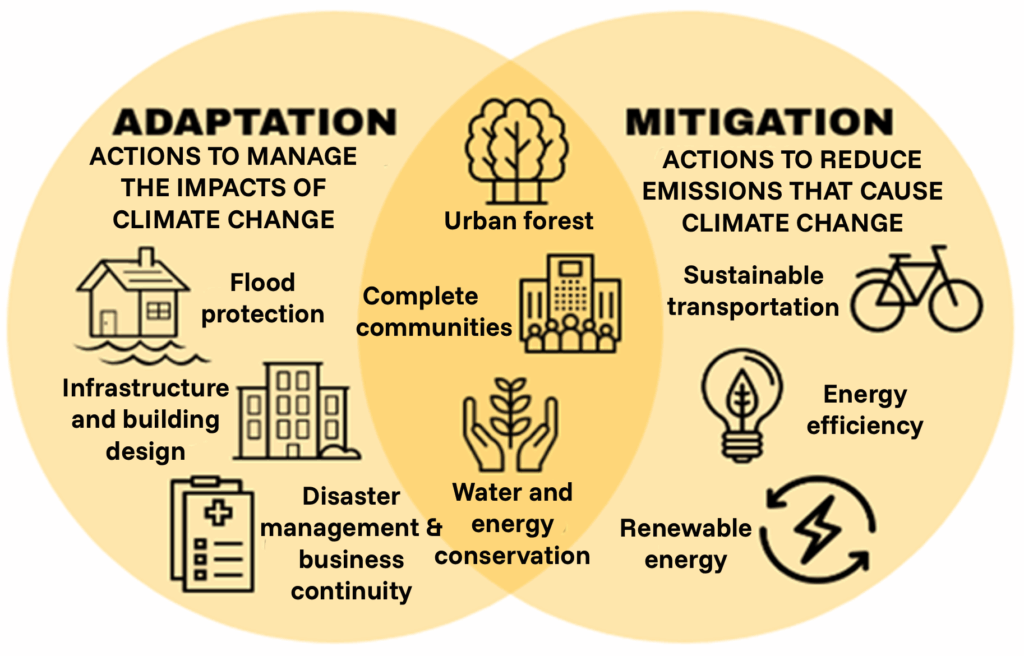
Climate action includes reducing greenhouse gas emissions (mitigation) and preparing for climate impacts (adaptation).
![]()
News & Updates
Sign up for our e-newsletter
Climate change in Northumberland
Climate change is already affecting Northumberland County in a variety of ways. The infographic below shows how the local climate is expected to change in the future and how these changes may impact our community.
Our strategy
Northumberland County has developed a Climate Action Strategy to respond to climate change by reducing greenhouse gas emissions from County operations and protecting our community, infrastructure, and ecosystems from climate risks.

In January 2025, County Council adopted our Corporate Greenhouse Gas Emissions Reduction Plan, which charts a pathway to reduce greenhouse gas emissions from County operations by 65% below 2005 levels by 2030 and reach net zero emissions by 2050.
To achieve these targets, the plan outlines actions in six key areas:
- Waste management
- County fleet and staff commuting
- Buildings and facilities
- Building a culture of climate action
- Natural environment
- Advocacy and influence
In March 2026, County Council approved our Climate Adaptation and Resiliency Plan, which establishes a clear path to ensure that our community is ready to respond to the impacts of climate change.
The plan focuses on reducing climate risks to our community, infrastructure, and natural environment through actions grouped into five themes:
- Natural systems
- Emergency management
- Planning & policy
- Water management
- Building partnerships
Take action at home
You can take practical actions to reduce your environmental impact. Explore tips, programs, and funding opportunities to help you take action at home and in your community.
Follow us on Facebook for monthly climate action tips.
Energy efficiency
The energy used to heat and power homes, especially from fossil fuels, contributes to greenhouse gas emissions. Improving efficiency can reduce emissions, ease demand, and lower costs.
- Natural Resources Canada offers practical tips to help you improve your home’s energy efficiency through small, low-cost actions.
- Canada’s Home Electrification Toolkit provides detailed information on upgrade options and key considerations for electrifying your home.
- The Energy Affordability Program offers free energy assessments and home retrofits for income-eligible households.
- The Ontario Home Renovation Savings Program provides rebates for upgrades such as insulation, air sealing, heat pumps, and solar panels.
- The Save on Energy Small Business Program supports small businesses with funding for lighting, refrigeration, and smart thermostat upgrades.
- Ontario’s Net Metering Program allows customers who generate renewable energy to send excess electricity to the grid in exchange for credits.
Enhancing our ecosystems
Supporting and expanding ecosystems helps protect biodiversity in Northumberland and provides important environmental benefits. Healthy ecosystems store carbon, reduce flood risk, improve water quality, and help reduce extreme heat.
- Plant a rain garden near a downspout to absorb runoff, reduce flood risk, and improve water quality. Toronto and Region Conservation Authority provide guidance on planning and maintaining rain gardens.
- Choose native plants suited to local growing conditions. Ontario Invasive Plant Council offers the Grow Me Instead Guide to support plant selection.
- Report invasive species sightings using EDDMapS to help trach and manage their spread.
- If your property borders a shoreline, plant native vegetation to reduce erosion, improve water quality, and support habitat. Watersheds Canada provides guidance on shoreline naturalization.
- Landowners can support restoration of endangered tallgrass prairie and oak savanna habitats. The Rice Lake Plains Partnership offers programs and resources to support participation in conservation efforts.
- The Clean Water-Healthy Land Funding Program, run by the Ganaraska Region Conservation Authority, provides funding and support for projects that enhance ecosystems and protect water resources.
- Lower Trent Conservation offers grants for projects that improve water quality through vegetation planting and erosion control.
- ALUS Kawarthas Peterborough Northumberland provides funding to farmers for ecosystem projects such as wetland restoration, windbreaks, and riparian buffers.
- The Ontario Soil and Crop Improvement Association offers cost-share programs to support projects that reduce emissions, sequester carbon and enhance biodiversity.
Transportation
Transportation is a major source of greenhouse gas emissions, and changing how we travel is key to addressing climate change. Shifting to active transportation or electric vehicles can also improve air quality.
- Drive more efficiently by accelerating gently, maintaining a steady speed, avoiding idling and keeping speeds moderate. Natural Resources Canada offers a free online eco-driving course to learn more about fuel-efficient driving.
- Consider walking or biking for short trips.
- Consider an e-bike for short and medium-distance travel; e-bikes use electric assistance to make longer trips easier.
- Explore local transit options available through Cobourg Transit and Port Hope Transit.
- Plan a staycation to explore local destinations and reduce fuel use. Check out the Northumberland Tourism website for things to explore close to home.
- When purchasing a new vehicle, consider an electric vehicle, which have lower operating costs than gasoline-powered vehicles and do not produce any direct emissions
- if you are considering an electric vehicle, the Electric Vehicle Affordability Program provides rebates of up $5,000 for electric vehicles and up to $2,500 for plug-in hybrid vehicles.
Waste
Reducing waste is an important part of climate action. When organic waste like food decomposes in landfills, it releases greenhouse gases. Managing, transporting and replacing products also creates emissions. Repairing and repurposing older objects helps reduce waste and environmental impact.
- Reduce food waste by planning meals, storing food properly, and using leftovers. Visit Love Food Hate Waste Canada’s webpage for more tips.
- Use the Green Bin program to compost kitchen scraps and keep food waste out of landfills.
- Donate or sell used items instead of throwing them away.
- Sort garbage, recycling, and organics correctly to help divert waste from landfills.
- Buy second-hand to save money and extend the life of products.
- Borrow or rent items you only need occasionally instead of buying them.
- Repair clothing and other items instead of throwing them away.
Water conservation
Reducing water use helps protect local water resources, particularly during droughts, and can lower household costs.
- Lower Trent Conservation offers a Water Conservation Guide with simple tips to help reduce water use at home.
- Install a rain barrel or cistern to capture rainwater for outdoor use, helping reduce runoff and support water consumption.
Working together
Caring for the environment and taking climate action are more effective when done collectively.
Working together with others helps amplify individual efforts and supports a more resilient community.

- Talk about climate change with friends and family to raise awareness and share ways to take action.
- Check in on neighbours during heatwaves and severe weather, especially older adults and people with health conditions.
- Get involved in local environmental groups. Community Power Northumberland shares information on groups and local climate action opportunities.
- Take part in citizen science projects that help collect environmental data and support research on climate change and conservation.
Preparing for climate-related emergencies
As we continue to feel the impacts of climate change, it’s important to be prepared for emergencies that arise due to extreme weather events.
- Visit our Emergency Preparedness page and Lakelands Public Health to learn how to prepare for different emergencies such as flooding, extreme weather, and extreme heat.
- Prepare emergency kits for your home and vehicle so you can be self-sufficient for at least 72-hours.
- Review your home or tenant insurance policy to understand what is covered and avoid unexpected costs after an emergency.
- Contact your insurance provider to ask about additional flood damage coverage.
- Complete a FireSmart Home Ignition Zone Self-Assessment to assess your home’s wildfire resilience.
- Complete a Home Flood Protection Check-Up to learn how to protect your home and belongings from flooding.
- Download the WeatherCAN app to receive alerts for severe weather and extreme temperatures.
Climate change FAQs
Climate change refers to the changes in temperature, precipitation, and weather patterns caused by the buildup of greenhouse gases in our atmosphere. Greenhouse gases are gases (primarily carbon dioxide, methane, and nitrous oxide) that trap heat in our atmosphere. The amount of greenhouse gases in our atmosphere has rapidly increased beyond what can be reliably removed from plants and other natural processes. This has caused our atmosphere to trap more and more heat. According to Environment Canada, the annual average temperature in Canada has increased by over 2°C since 1948.
When we refer to “climate change”, we’re not talking about day-to-day variation in the weather, but long-term changes in what the average temperature and weather patterns in a region look like. These changes can negatively affect humans and nature.
The main cause of climate change is human activities that have increased the amount of greenhouse gases in our atmosphere. Much of this increase is due to the widespread burning of fossil fuels such as coal, oil, and natural gas since the Industrial Revolution. Other human-driven sources of greenhouse gas emissions include waste decomposition in landfills and land use changes like deforestation.
Scientists have observed that the quantity of carbon in our atmosphere has increased rapidly since the beginning of the Industrial Revolution and that the proportion of different types of carbon in the atmosphere has changed to be closer to the proportions found in fossil fuels. They have also created models simulating how different human and natural factors influence global temperatures and found that only the models that included human activities matched the observed temperature increase.
Climate change is affecting Northumberland in many different ways. Events such as the 2016 drought, high water levels along Lake Ontario in 2017 and 2019, the May 2022 derecho, the winter 2022 ice storm, and poor air quality in 2025 due to wildfires have disrupted power, damaged infrastructure, and created health and safety risks.
Climate change will continue to affect Northumberland County into the future. Check out our Projections infographic to see how Northumberland County’s climate is expected to change in the future and how these changes will affect our community.
We know that human activities are causing climate change, which means that we have the power to lessen it by reducing greenhouse gas emissions. We also know how climate change is likely to impact our community, which means that we can prepare for these impacts in advance.
Climate action means taking initiative to reduce emissions that cause climate change and respond to the ways it will impact our community. Reducing emissions is called mitigation and responding to climate impacts is called adaptation.
Taking climate action helps ensure that the well-being of our community, our economy, and our ecosystems continues into the future. See Our strategy for how Northumberland County is responding to climate change and Take action at home for tips, resources, and programs that can help you take climate action.